

by Ron Driskill
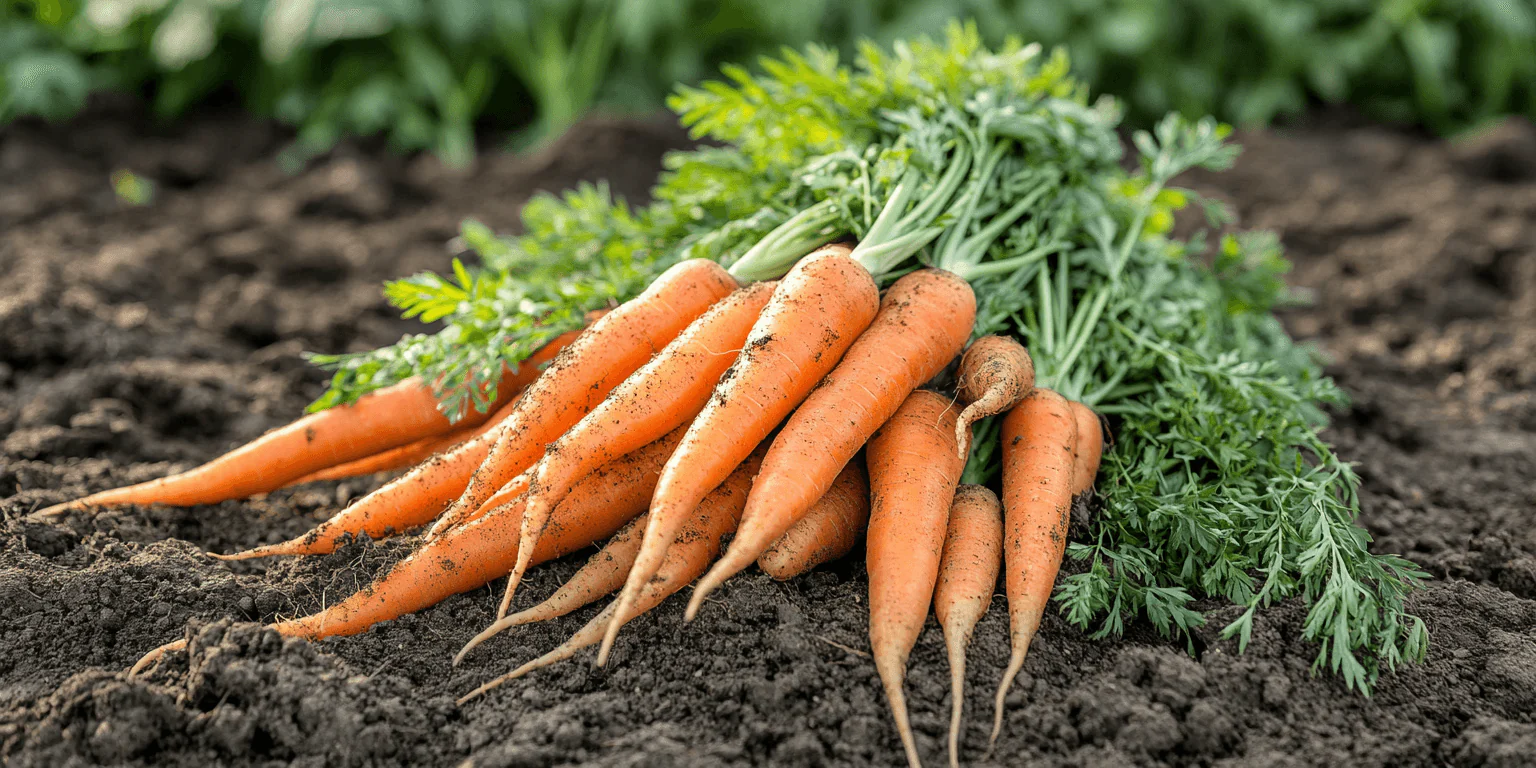
The first day I pulled a carrot from my garden I could taste the difference between store-bought and my own. Called Yaya, the variety was the sweetest I had ever tried, and is still a winner.
The beauty of it is that you can plant carrots from now until the first week of July to get a crop.
Frost will not hurt them and, in fact, they will become sweeter. A lot of people put straw or hay over them in the fall in order to
pull them any time they want during the winter, or they simply mound soil over the tops.
If thick enough, the cover you put on will prevent the ground from freezing.
A reasonably “light” soil will do, although carrots can also take a somewhat clay-like soil. Soil should be no less than 25 cm (10″)
in depth to accommodate the longest varieties.
Some excellent varieties are Yaya, Scarlet Nantes, Little Fingers, Napoli, Danvers, Chantenay, Oxheart and Bolero.
Before you sow, make rows with a hoe, broadcast some 6-12-12 fertilizer in each row, and then sow the seeds thinly and cover with a ¼-inch of soil, sand, or peat moss.
You may want to drench the row with RX-15, a water-soluble fertilizer with trace elements that may be absent from your garden.
Keep the soil constantly moist to prevent drying out, which happens easily with such light seed coverage, and to keep the growth
vigorous.
Carrots love sunlight so make sure they are getting between 6 and 8 hours each day. It usually takes carrots about 14 to 21 days to
germinate.
When the carrots are about 2 or 3 cm (1″ tall), thin them out so that there is at least 8 cm (3″) on either side of each carrot. If the
shoulders start to turn green during the growing season, rake dirt over them.
A row of carrots is more
than a garden crop —
it’s patience, hard work,
and a reminder that the
best things in life grow
slowly, one season at a
time.